

Photography & Filming at Windsor Castle: What's Allowed & What Isn't
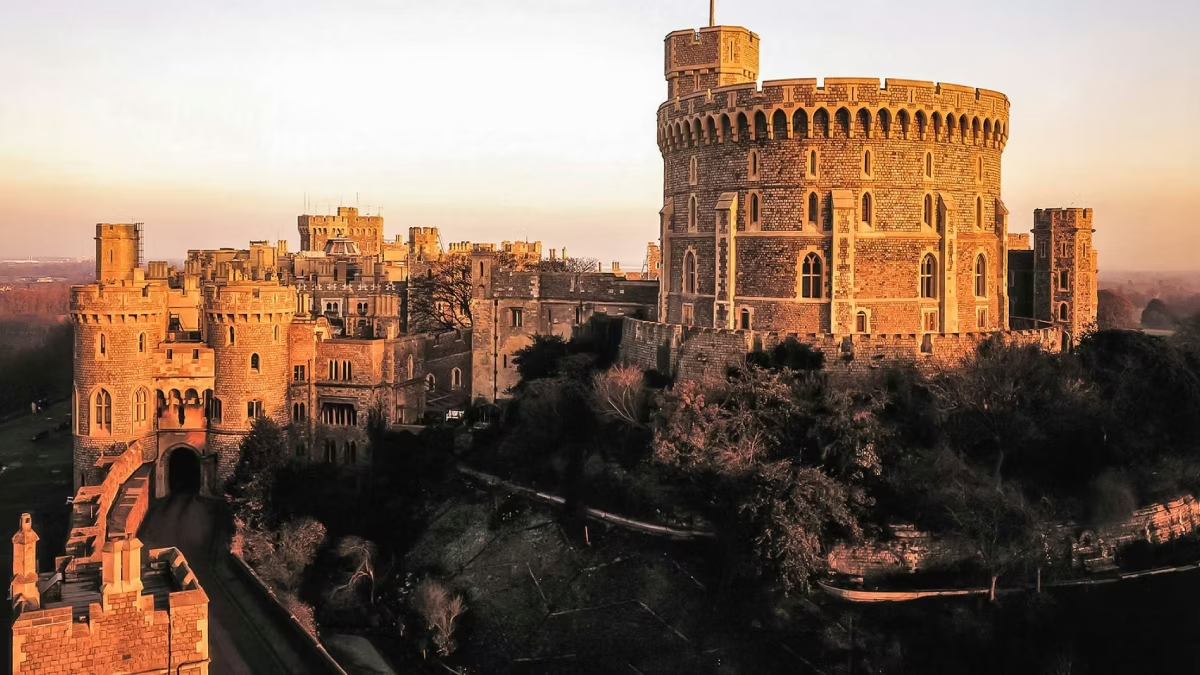
Photography and filming — including wearable devices such as GoPros and smartwatches — are not permitted inside the State Apartments, the Semi-State Rooms, or St. George’s Chapel. Photography for personal non-commercial use is permitted and encouraged in all outdoor areas of the castle precincts. Drones are not permitted anywhere within Windsor Castle. Phone calls should be made and taken outdoors only.
The photography ban at Windsor Castle is the most discussed limitation in visitor reviews and the single piece of information visitors most frequently wish they had known before arriving. Understanding the rule clearly — and knowing where photography is genuinely excellent — helps you make the most of your visit and set the right expectations.
The Photography Rules: A Clear Summary
| Location | Photography Permitted? |
|---|---|
| State Apartments (inside) | No |
| Semi-State Rooms (inside) | No |
| St. George's Chapel (inside) | No |
| Castle precincts & grounds (outdoors) | Yes — encouraged |
| Lower Ward | Yes |
| Moat Garden | Yes |
| Horseshoe Cloister (exterior) | Yes |
| Quadrangle (outdoor areas) | Yes |
| North Terrace (outdoor) | Yes |
| Round Tower (exterior) | Yes |
| Long Walk (outside castle gates) | Yes |
| Anywhere at Windsor Castle | No drones |
Wearable devices: The photography ban explicitly includes wearable devices — GoPro cameras, smartwatch cameras, and similar recording devices. These may not be used inside the State Apartments, Semi-State Rooms, or St. George’s Chapel.
Phone calls: Out of consideration for other visitors, making and receiving phone calls inside the State Apartments and St. George’s Chapel is not appropriate. Mobile phones should be used only in outdoor areas.
No. Photography and filming — including wearable devices — are not permitted inside the State Apartments, Semi-State Rooms, or St. George’s Chapel. Photography for personal non-commercial use is permitted and encouraged in all outdoor areas of the castle precincts. Drones are prohibited everywhere within Windsor Castle.
Why the Ban Exists
Windsor Castle is a working royal palace, not a preserved museum. The ban on photography inside the State Apartments reflects three main reasons:
1. The rooms are still in use. The State Apartments are used for live royal events — state dinners, investitures, diplomatic receptions. The interior configuration and decoration of working state rooms is not for general broadcast.
2. Conservation. Cumulative flash photography causes measurable long-term damage to historic paintings, textiles, and gilded surfaces. Windsor’s interiors contain irreplaceable works of art — the Van Dycks and Rubens in the State Apartments cannot be replaced.
3. The chapel as a place of active worship. St. George’s Chapel is not a museum — it holds regular services, including the daily evening prayer. Photography restrictions respect its character as an active place of worship.
The rule is consistently enforced by staff throughout the indoor route.
The Best Outdoor Photography Spots
The outdoor photography available at Windsor Castle is genuinely excellent — the castle’s architecture, towers, and setting provide outstanding subject matter that many visitors find more than compensates for the indoor ban.
The Long Walk The 2.65-mile avenue leading from the castle’s George IV Gate to the Copper Horse statue on Snow Hill is arguably the finest approach vista in England. The castle dominates the far end of the avenue from virtually any point along its length — a classic wide-angle shot that no amount of indoor photography could match. Best light: morning (east-facing facade catches early light in summer).
The Moat Garden The castle’s former moat, now a carefully tended garden, provides intimate close-up views of the castle walls and towers from below. A striking architectural angle very different from the Long Walk panorama.
The Horseshoe Cloister The 15th-century Horseshoe Cloister in the Lower Ward — a curved, timber-framed building enclosing the approach to St. George’s Chapel — is one of Windsor Castle’s most photogenic architectural details and relatively uncrowded compared to the main visitor route.
The Quadrangle The central quadrangle of the castle’s Upper Ward provides dramatic views of the Round Tower and the castle’s domestic buildings. On days when the Changing of the Guard ceremony takes place here (when the King is in residence), it is the most photographically dynamic space in the castle.
The North Terrace The stone terrace on the north side of the castle offers sweeping views across the Thames Valley, the Eton College playing fields, and the Berkshire countryside beyond. A superb setting for wider context shots of the castle and its landscape.
The Round Tower from below The Round Tower — the castle’s defining vertical feature — is best photographed from the approaches within the Middle Ward, where its full height is visible against the sky.
Tips for Making the Most of Your Photos
Arrive early or visit in the afternoon for fewer people in outdoor shots. The castle grounds are busiest from mid-morning to early afternoon, particularly on weekends and Changing of the Guard days. The first and last 90 minutes of opening are consistently quieter.
Visit in autumn or winter for the light. The castle’s stone — Heath stone from local quarries — photographs particularly well in the lower-angle light of autumn and winter, and the absence of summer crowds means cleaner compositions in the precincts.
Use the natural height of the castle to your advantage. The North Terrace and the Quadrangle both sit elevated — the views outward from these points are as photogenic as the castle itself.
The Long Walk outside the castle gates is free. You do not need an admission ticket to walk along the Long Walk or photograph Windsor Castle from the Great Park end of the avenue. This is the most impressive wide-angle view of the castle, and it is completely free to access.
Drones
Drones are not permitted anywhere within Windsor Castle — in the precincts, grounds, or airspace immediately above the site. Windsor Castle is a working royal palace and a protected site, and unauthorised UAV flights are illegal. This applies to recreational as well as professional drones.
Commercial and Media Filming
All requests for commercial filming at Windsor Castle must be submitted to the Royal Collection Trust Press Office at [email protected]. Applications must relate to the Royal Collection or the public opening of the royal residences, and must be submitted a minimum of six weeks before the proposed filming date.
Location and reality filming are not permitted at the official royal residences. Filming from the Long Walk and Windsor Great Park is arranged through The Crown Estate separately.
Filming of St. George’s Chapel specifically should be directed to the Chapter Clerk.
Commercial filming of Windsor Castle’s exterior from public areas (the Long Walk, Windsor town streets, the riverside) does not require RCT permission but may require local authority permits depending on the nature and scale of the production.
Wedding Photography
No parts of Windsor Castle may be used as the setting for wedding photography. This applies to both indoor areas and the castle precincts.
Frequently Asked Questions
Can I use a GoPro or action camera inside Windsor Castle?
No. The photography ban explicitly includes wearable and action cameras — GoPros, helmet cameras, and similar devices. These are not permitted inside the State Apartments, Semi-State Rooms, or St. George’s Chapel.
Can I film with my phone inside Windsor Castle?
No. Photography and filming — including via smartphone — are not permitted inside the State Apartments, Semi-State Rooms, or St. George’s Chapel. Photography outside in the precincts is permitted.
Why can’t you take photos inside Windsor Castle?
The ban reflects three factors: the rooms are still used for live royal events; flash photography causes long-term conservation damage to irreplaceable artworks; and St. George’s Chapel is an active place of worship. The rule is consistently enforced.
Where are the best outdoor photography spots at Windsor Castle?
The Long Walk (outside the castle gates, free to access), the Moat Garden, the Horseshoe Cloister, the Quadrangle, and the North Terrace. The Long Walk offers the most iconic and unobstructed wide-angle view of the castle.
Are drones allowed at Windsor Castle?
No. Drones are prohibited everywhere within Windsor Castle — in the grounds, precincts, and airspace above the site. Windsor is a working royal palace and a protected location; unauthorised drone flights are illegal.
Can I take photos at the Changing of the Guard?
Yes. Photography at the Changing of the Guard ceremony is permitted — it takes place in the outdoor precincts. There is no photography restriction on the ceremony itself. The outdoor route of the guards through Windsor town, before they enter the castle gates, is also fully photographable from a public street.
